learning, dissected no. 1: duolingo
Relearning my first language, one streak at a time
I restarted Duolingo to relearn Vietnamese, my first language. Here’s what it gets right, what I’d change, and what it taught me about designing for adult learners.
By Diane Nguyen · · 3-minute skim, 6-minute full read
1-minute read
Why Duolingo, why now
Duolingo and I go way back. I’ve picked it up a few times over the years, but this latest round feels different.
I’m a first-generation Vietnamese American, and Vietnamese was actually my first language. As I grew up, I became more Americanized, and my Vietnamese slipped. Lately I’ve wanted to get back in touch with my heritage and cultural roots, and with a trip to Vietnam coming up, I want my skills back in shape. So I restarted Duolingo on the free version, fully aware that the ads nudging me to upgrade would be frequent.
Somewhere between lessons, my learning designer brain kicked in. What does Duolingo actually do well? And if I could change anything, what would it be? I know none of this is an overnight fix, but it’s fun to daydream about what the perfect language-learning tool would look like, at least in my opinion.
7 points · 1-minute skim
What I love
would steal
-
It asks what I know, and why I’m here
My prior knowledge and my goals, right from the start.
read the longer versionshow less
When I started, Duolingo asked about my prior knowledge, and I selected that I know a little Vietnamese. That’s an understatement, since it was my first language, but my Vietnamese has always been conversational: the everyday kind, nothing philosophical. Starting from what someone already knows respects their time and keeps experienced learners from getting bored on day one.
It also asks why you’re learning, with options like prepare for travel, just for fun, spend time productively, connect with people, support my education, and boost my career. That’s learner persona research built right into onboarding.
-
Bite-sized lessons
Five minutes or less, and your progress is saved.
read the longer versionshow less
Every session is broken into small lessons. That’s perfect for someone on the go: do a quick lesson, close the app, and pick up right where you left off. There’s no knowledge dumping, just one small chunk at a time.
-
It brings back what I learned
You’re never starting completely fresh.
read the longer versionshow less
As you move from lesson to lesson, Duolingo weaves in reminders of earlier material. There’s always something to remember, which is retrieval practice quietly doing its job.
-
A quick check at the end
A short quiz shows what actually stuck.
read the longer versionshow less
Each session wraps up with a short quiz, so I can see what I’ve learned before moving on.
-
Themes show where you’re headed
Greetings first, then food, like an agenda.
read the longer versionshow less
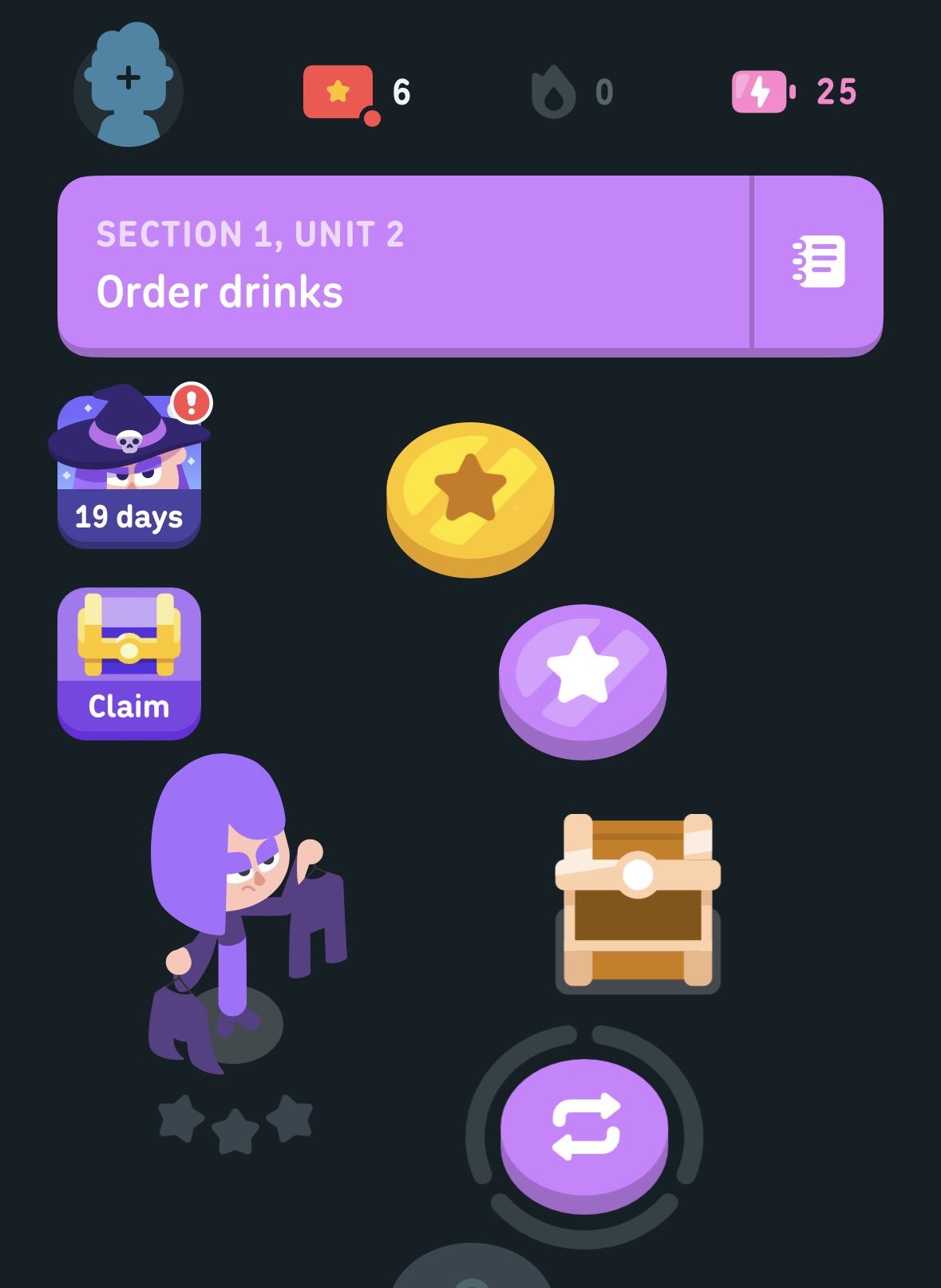
Lessons are grouped by theme. Knowing the theme up front means you know what’s coming and can connect new words to a topic instead of memorizing a random list.
-
Gamification that motivates
Leaderboards, badges, and a forgiving streak.
read the longer versionshow less
Even though I’m not competing with people I know, the leaderboards still challenge me to keep going. And losing a streak stings, but it doesn’t wipe out your progress, so it feels like a nudge forward instead of a punishment.
-
More than one way to practice
Speaking, matching, and building sentences.
read the longer versionshow less
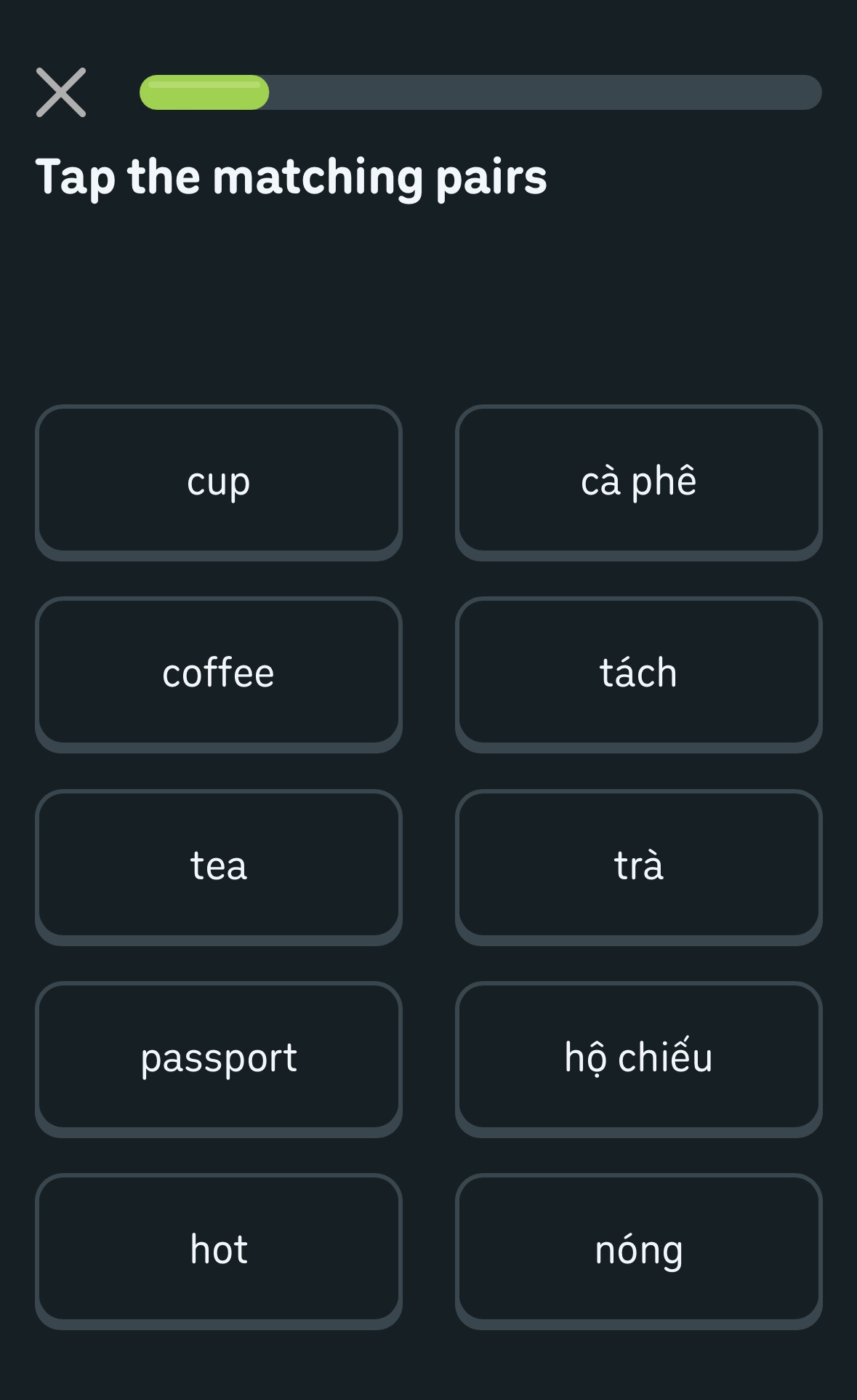
Each lesson mixes up how you work with words: speaking out loud, matching words to pictures, or listening and building the sentence yourself. The variety keeps lessons from feeling repetitive, and it’s UDL in action, giving learners multiple ways to take in and show what they know.
7 points · 1-minute skim
What I’d change
would change
-
The paywall interruptions
The main reason I stopped using the free version.
read the longer versionshow less
The ads and upgrade prompts felt aggressive. I get it: Duolingo is a business with metrics to hit, and those prompts are designed to get people to click. But even with the free trials on offer, I’d rather not. When the paywall interrupts the learning itself, learners leave.
-
Use my “why” to shape the lessons
It asks why I’m learning, but I can’t tell how my answer changes what I learn.
read the longer versionshow less
Duolingo collects this persona info up front, which is great. But I couldn’t see how my pick shaped the lessons. If I say I’m preparing for travel, I’d expect more ordering food, shopping, and asking for directions. If I’m connecting with family, I’d expect more everyday conversation. Show learners how their goal shapes their path, so the question feels worth answering.
-
Start with the foundations
An opt-in lesson on the alphabet, accent marks, and tones.
read the longer versionshow less
The Vietnamese alphabet is very different from English. An “i,” for example, sounds like “ee.” And because Vietnamese is tonal, the same letters can mean completely different things: ba is three, but bà is grandmother. Duolingo leans conversational, but an opt-in foundations lesson would give learners the building blocks first.
-
Recognize dialects
Southern, Central, and Northern Vietnamese aren’t the same.
read the longer versionshow less
I grew up speaking a mix of Southern and Central Vietnamese. Even everyday words change: spoon is muỗng in the South and thìa in the North. If you’re learning before a trip, you want to know which version you’re learning so you don’t land and think, “Wait, did I learn all this for nothing?” Choosing a dialect, or at least flagging differences, would help with plenty of other languages too.
-
Accept more than one right answer
Language is fluid, and the feedback should be too.
read the longer versionshow less
Sometimes Duolingo marks me wrong when I’m actually right. Just like in English, you can say “I’m happy” or “I’m excited” and get the same meaning across. But if the speech recognition doesn’t match what it expects, you get penalized.
-
Real-life scenarios
Order at a simulated café, not just a unit on coffee.
read the longer versionshow less
I love the themes, but I’d take them a step further. Some practice sentences are ones you’d never actually say, so grounding lessons in real situations would make them more useful. The end-of-session quizzes could work the same way: less “translate this sentence,” more “handle this moment.”
-
Feedback from real conversation
Practice with a peer, tutor, or AI partner.
read the longer versionshow less
Peer learning is essential. The key is real feedback: “You could have said it this way, and here’s why,” or even an honest “I didn’t understand you.” That kind of hands-on practice turns lessons into confidence, as long as the partner doesn’t penalize you for saying it right in a different way.
1-minute read
So, am I still using it?
Not right now. This was my third go at Duolingo: Spanish with no prior knowledge, Japanese with a little, and now Vietnamese.
What made me stop was a family friend asking, “Why are you using Duolingo?” The app had been marking things wrong that I knew were right, and hearing that from someone fluent sealed it. So I’m putting my prior knowledge to the test the best way I know: practicing with family.
In Vietnam, I’ll mostly be shopping and ordering food. I liked that Duolingo taught me to order coffee, but in real life you don’t always say the full formal sentence. Sometimes it’s just cho một cái, “give me one.” I’d love to learn it the way people actually say it.
My dream language app
Simulations. Drop me into a moment I’ll actually face, like browsing a clothing stall at a market in Vietnam. A shopkeeper walks up and asks me the questions I’d really hear: What size are you looking for? Which color do you like? Do you want to try it on?
Then it’s my turn to ask how much it costs, and to understand the answer in real numbers and real currency. Instead of memorizing sentence structures, I’d learn by responding in the moment, the way it actually happens. I want to see the language in action.
Practice the moment, not just the vocabulary.
So I sketched it. A shopkeeper asks the questions, you reply, and every answer gets a reason instead of a penalty.
This is interactive, so give it a try. Click what you want to say, then hold the mic to say it in Vietnamese. It takes about two minutes.
the L&D takeaway
Know your learner, and know their why
People open Duolingo for completely different reasons, and Duolingo actually asks: travel, fun, connecting with people, school, career, and more. I wanted to reconnect with my culture and prepare for a trip. Someone else might want to talk with a family member, expand their horizons, or support a language class. Same app, very different goals.
Onboarding and workplace training are no different. Before building anything, get to know your audience: their background, their starting point, and why they’re there. Asking is only the first step, though. The real work is using those answers to shape the experience: design with learner personas and branching scenarios that help each person reach the same learning objective on a path that fits them.
Duolingo is a trademark of Duolingo, Inc. This is my personal take as a learner and learning designer, and I’m not affiliated with Duolingo.
up next
More teardowns coming soon
I’m picking the next app or learning experience to take apart.